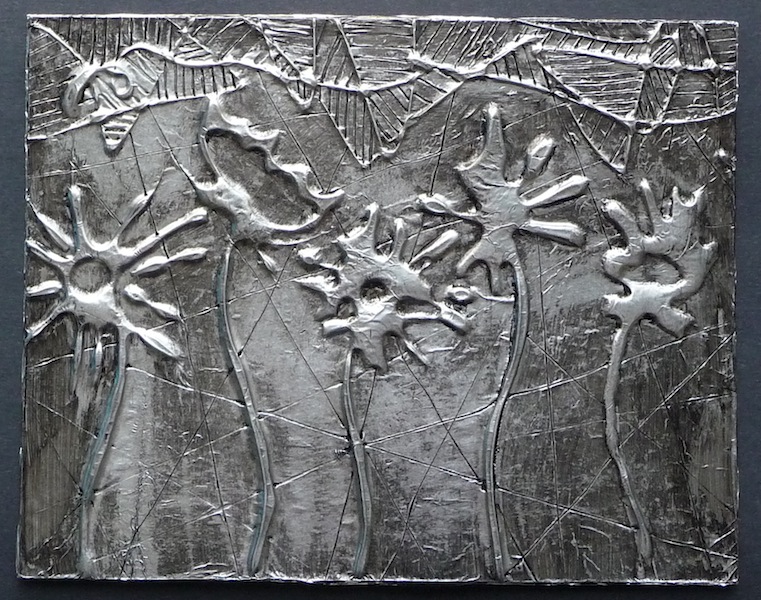
I came across this unique idea on a great blog called Make It A Wonderful Life. It was simply too cool not to try out, and the great directions ensured everything worked out well. The end result reminds me of the old tin ceiling tiles which were popular in the late 1800’s and early 1900’s, during the Victorian era. While there aren’t so many vintage ones left, there are plenty of modern versions you can view on the internet.
Tag Archives: arts and crafts for kids
Splattered Greeting Cards
Most of us need a steady supply of greeting cards throughout the year for various occasions, but never as much as now. These Jackson Pollock style splatter cards are easy and fun to make, so let the assembly line begin.
Picture This
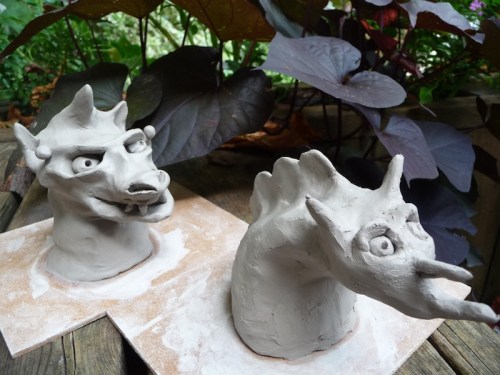
Polymer clay is a wonderful, versatile material used to make an amazing range of things including jewelry, decorative boxes, and an endless parade of creatures. With a little patience, kids can easily be taught how to make some basic canes and some impressive marbling. Strange and wonderful results await.
Filed under polymer clay
Sgraffito
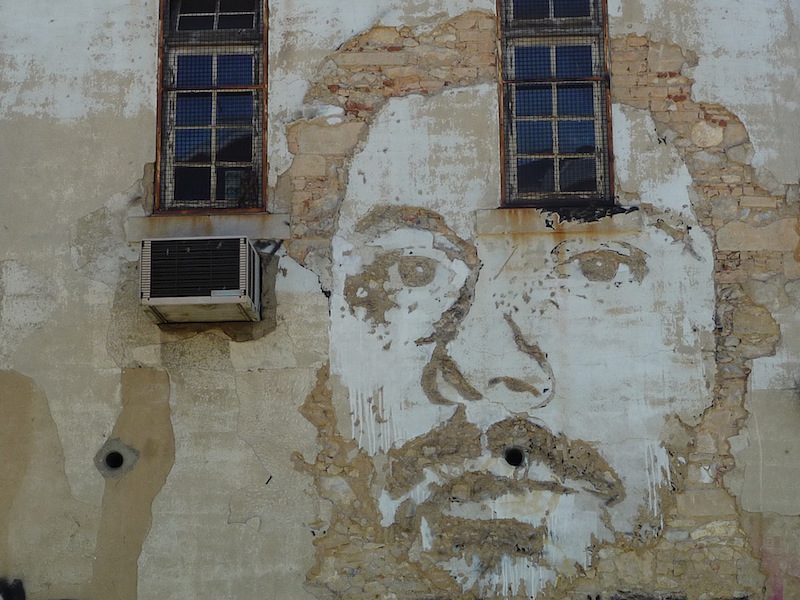
This summer, I saw some wonderful street art in Lisbon made by the artist Alexandre Farto, also known as Vhils. He creates portraits on the facade of buildings by chipping away at the plaster surface and revealing the underlying layers of bricks and stones. You can have a look at this video to see him working.
It was very impressive and had me wondering how this could translate into a project for children. Abandoned buildings…power tools…not practical directions to take! But those wonderful layers had me thinking about sgraffito. Sgraffito, which comes from the Italian word sgraffiare, means to scratch. It is a very old technique which involves applying 2 or more layers of tinted plaster on top of each other. A variety of tools are then used to scratch away sections of the uppermost layer, revealing the underlying colours, which add depth and texture to the work. It’s primary use was for wall decor and ceramics, and while it was explored in many parts of the world, it became immensely popular in 16th century Italy. While traditionally made with plaster, it can also be created with paints and oil pastels.
Filed under sgraffito
Hundertwasser’s Unusual Designs
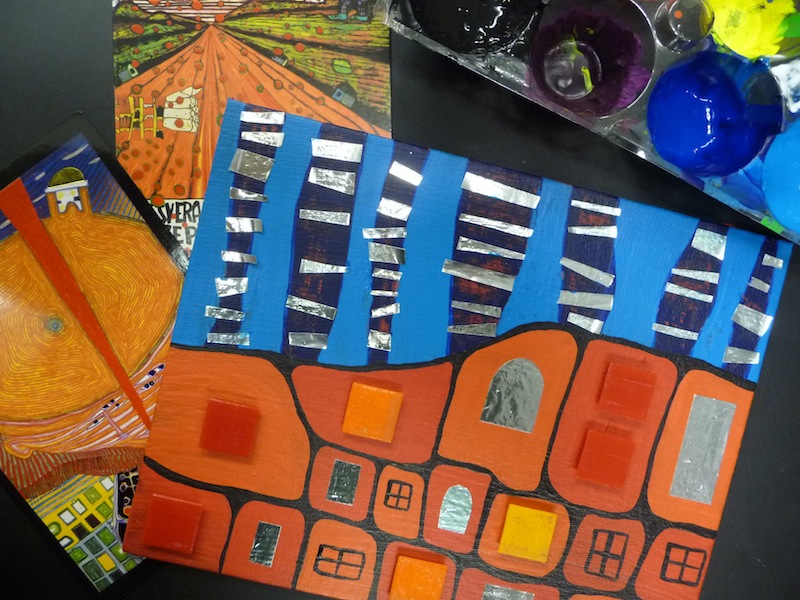
The Austrian artist and architect, Friedensreich Hundertwasser, had a truly unique way of expressing himself. His work was filled with bold colours, organic shapes, and an obvious respect for nature. Some his architectural designs included rooftops covered with grass, deliberately uneven apartment floors, and always a preference for curvy lines over straight ones. He loved to experiment and often chose to make his own paints, while also exploring a variety of different supports for his work like wood and wrapping paper. He remains one of the most well-known contemporary Austrian artists, and his unique and unusual architectural designs and paintings continue to draw admiration today.
This mixed media project is about painting a building inspired by Hundertwasser’s style, filled with vibrantly coloured waves, curves, and irregular forms.
Filed under Friedensreich Hundertwasser, mixed media, painting
Painted Sticks
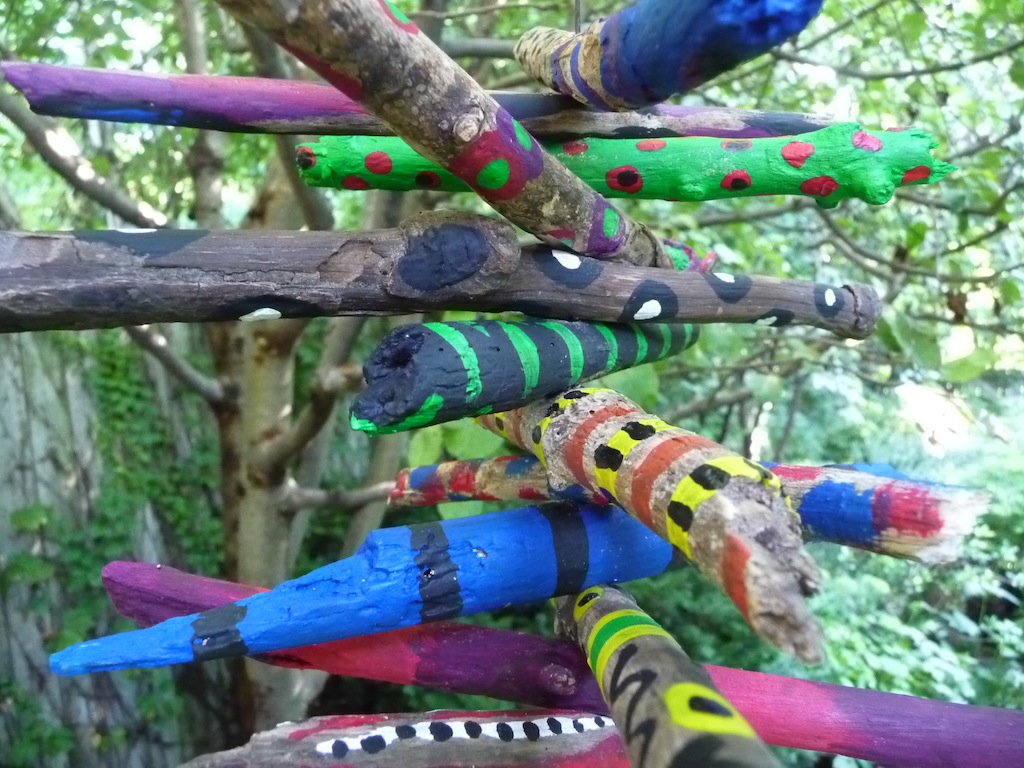
Blending art and nature is a wonderful way to beautify your outdoor space, and it all begins with a little exploring. You’ll need nothing more than a sunny afternoon and some eager children willing to wander through your local park, ravine or woods to gather sticks for this project.
Filed under Art and Nature, painted sticks
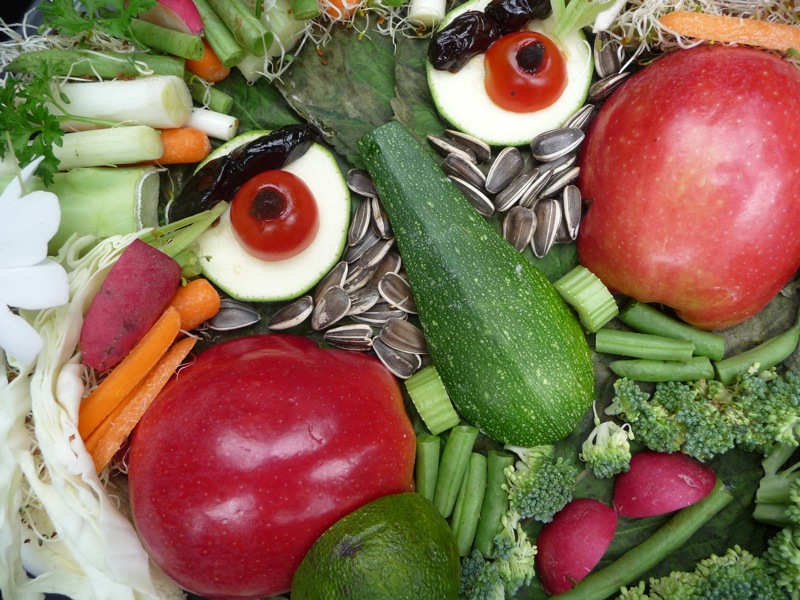
Edible Portraits
Giuseppe Arcimboldo was a talented 16th century Italian artist whose work included court portraitist, decorator, and costume designer. It was, however, his unique and unusual portraits that he is best known for, where fruits, vegetables, plant material and other unexpected objects were assembled to create human representations. While this might seem out of the ordinary, his greatly admired paintings were made during the Renaissance, a period where lots of unusual explorations in art took place. Needless to say, this project was a hit. Kids loved the idea of making their art and eating it too.
Filed under Art and Nature, Artists, food art, Giuseppe Arcimboldo
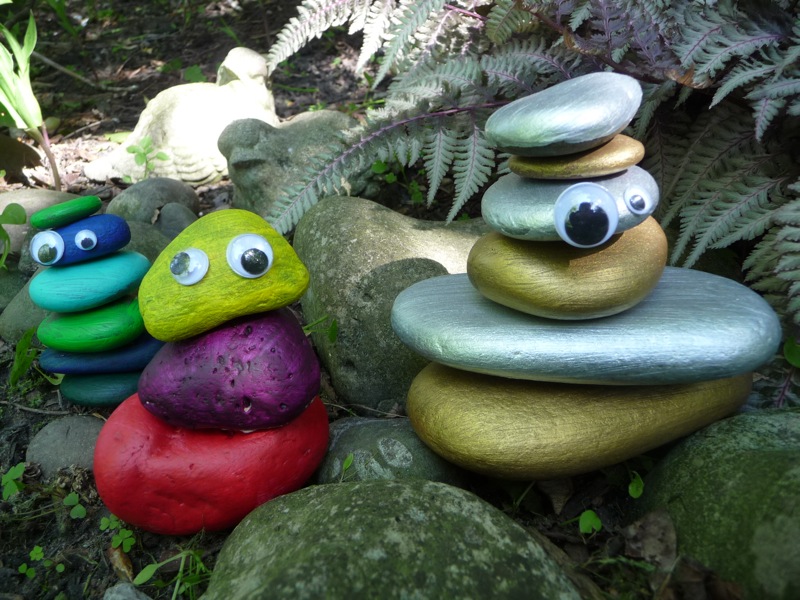
Stacking Stones
Humans have been stacking stones for an awfully long time. England’s Stonehenge was thought to be used as a burial site, and created as early as 2500BC. Inuksuks, made by the inhabitants of the Arctic region, were used as markers for travel routes and hunting grounds. Cairns have been found in Scandinavia as trail and sea marks, and in Somalia, to indicate tombs of former kings. Modern cairns are commonly used to indicate hiking trails, biking trails, or areas of possible danger. And some very patient people have even transformed rock balancing into performance art. These man-made stacks of stones and delicately balanced sculptures are truly fascinating things of beauty.
Filed under Art and Nature, rock painting, sculpture