

Salt dough is a wonderful way for kids to explore textures. They can easily turn what they make into any number of things, like magnets or ornaments.
Salt dough is a wonderful way for kids to explore textures. They can easily turn what they make into any number of things, like magnets or ornaments.
Filed under salt dough
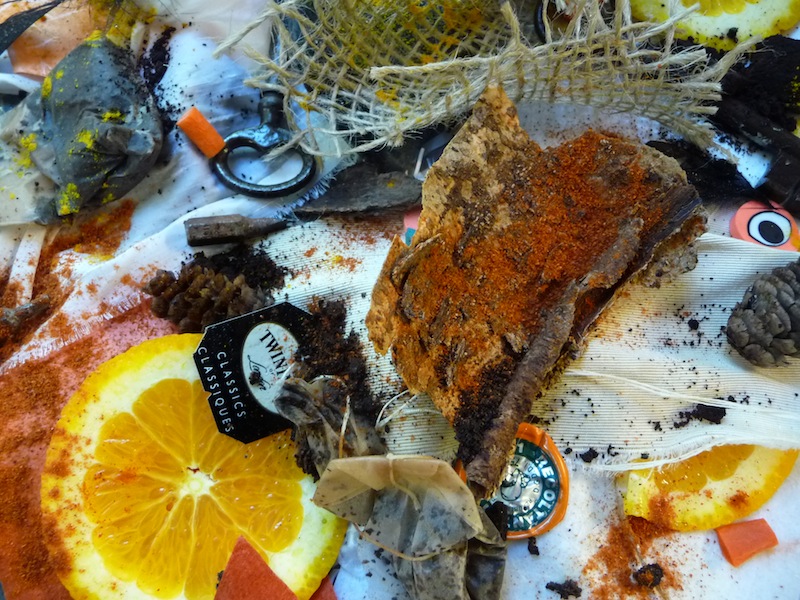
Imagine gathering an eclectic mix of materials, bundling them together, burying them in your garden for a couple of months, and letting nature do its thing. What kid wouldn’t want to do that? This experiment with nature is called an erosion bundle, and can provide some very interesting supplies for collage making later on. It’s also an opportunity to show kids what kind of effect the elements will have on the materials, as decay and decomposition take hold. I first came across this idea on a blog called The Erosion Bundle Project and couldn’t resist trying it out.
This bundle was buried yesterday, and will remain there until the end of October, just in time to make a Halloween collage. So keep that in mind when choosing your materials, and stay tuned for the big reveal! Continue reading
Filed under Art and Nature, Erosion Bundle
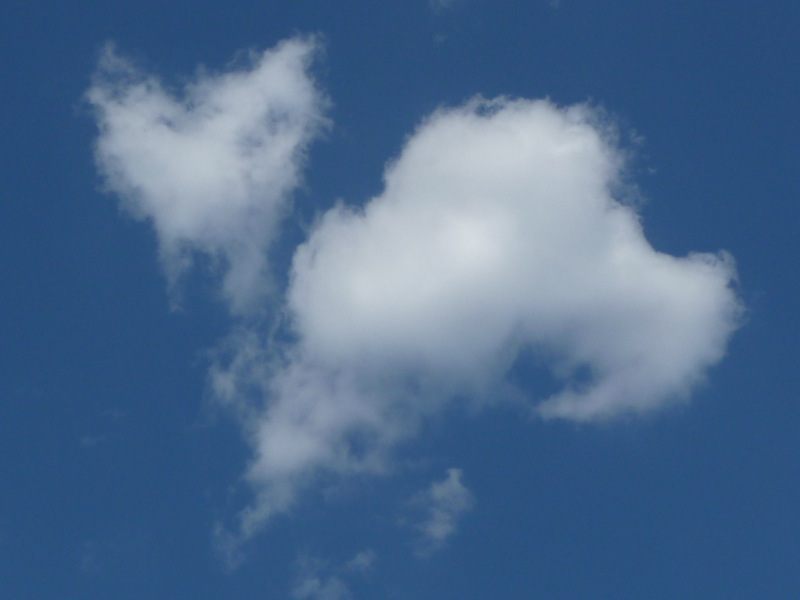
It sounds like a disorder of some kind, but it’s nothing more than the ability to see a cat in the cloud above. Pareidolia is a psychological phenomenon involving a vague and random stimulus (usually an image or sound) being perceived as significant. In other words, when you see a little face in a light socket, an animal in a cloud, or a growling mouth in the front grille of a car, that’s pareidolia. It’s about the mind trying to make sense of the abstract, and it’s a great concept to explore with children.
Filed under painting, Pareidolia

Cyanotype printing, also known as sun printing, is a technique which was discovered in 1842 by scientist Sir John Herschel. At the time, it was used primarily to reproduce engineering and architectural drawings. When the botanist Anna Atkins learned of the process, she used it to document plant life from her collection, and is credited with bringing the process to the world of photography.
The process is fairly simple. Chemically treated surfaces like paper and fabric are exposed to sunlight, a chemical reaction takes place, and you’re left with fascinating silhouettes on beautiful blue backgrounds. While this normally requires mixing chemicals, pre-treated papers are available, making it easy and safe to involve children.
Filed under Cyanotype Prints, image transfers
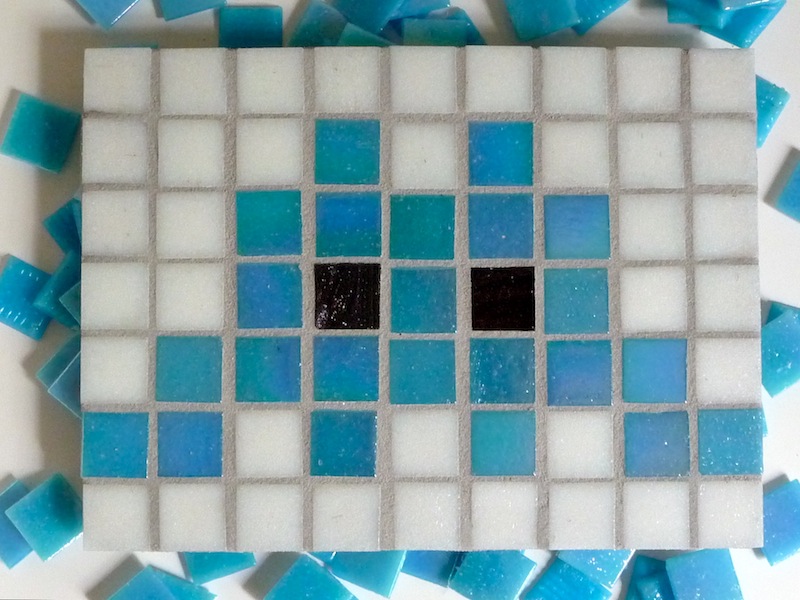
Remember the arcade video game Space Invaders? It was released in the late 70’s, and become incredibly popular in the 80’s. The purpose of the game is to defeat attacking aliens with a canon, and it’s these aliens that inspired French street artist, Invader, to make mosaics of the characters and place them in urban settings around the world. These little aliens are very simple to reproduce, and perfect for children to try their hand at working with mosaics tiles.
Filed under mosaics

Camouflage occurs when animals are either hard to see, like a black panther lurking in the night looking for its prey, or when they blend in with their environment by resembling something else, like a stick insect looking like a twig. When animals are hard to see, it increases their chance of survival. Children can explore this idea by making some background patterns and a few creatures of their own. Continue reading
Filed under animals/creatures, Art and Nature, drawing
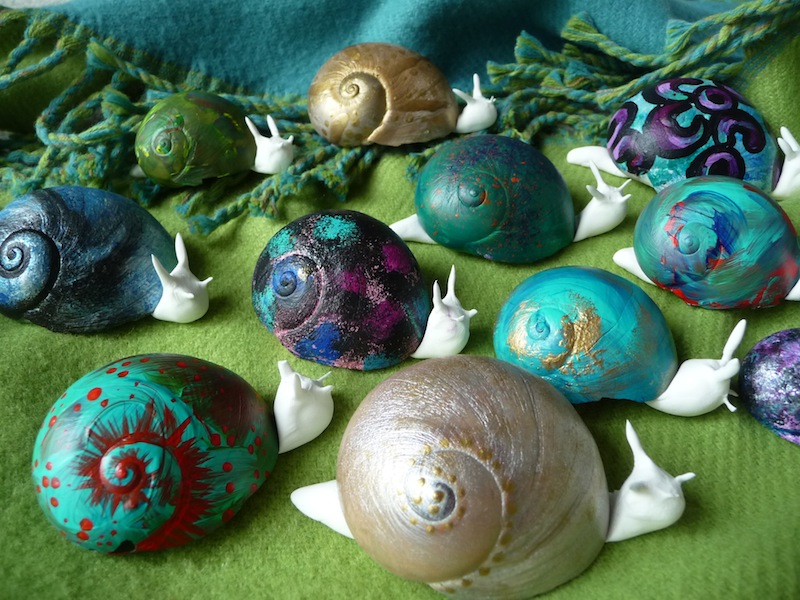
This idea was inspired by the work of London street artist Slinkachu. Slinkachu finds snails roaming the streets of London, adds a little non-toxic paint to their shells, and returns them to their urban habitats unharmed and fully decorated. It’s all part of his rather humorous Inner City Snail Project where he pokes fun at the idea of “society’s relentless desire to appropriate every available inch of the cityscape for advertising, signage and even illegal graffiti.”
I’m not fond of snails because, well, they’re so slimy. And while I did eat them as a child, I’m working hard on trying to repress that memory. That means painting on a real, live snail is never going to happen. Children, however, are a fearless, inquisitive bunch. So if you happen to have some non-toxic paint and a few available snails in your backyard, it would be the coolest thing to paint them and watch them go about their business. I’ll just stick to the vacant shells. Continue reading
Filed under animals/creatures, Art and Nature, painting

It’s not surprising children love to make dioramas. It remains one of those classic school projects, where they can dream up a moment in time, an imaginary miniature world, filled with tiny characters and decor, all contained in a little box.
Filed under dioramas

Painting eggs is a popular activity and tradition this time of year, and there’s no shortage of styles to explore. Think of intricate and detailed designs on Ukrainian Easter eggs, experiments with marbling, speckling and layering, wonderful little characters emerging from creative minds, and of course the unexpected. Artists provide inspiration for so many things, so why not for eggs?
The American artist, Roy Lichtenstein, was born in 1923 and was well known for his work in the Pop Art style. For a number of years, he adapted images from comic books and turned them into large-scale paintings filled with thick black outlines, primary colours, and lots and lots of dots. Dots, comics, and bright colours? Sounds like a winning combination to entice children into a little egg painting.
Filed under Artists, eggs, painting, Pop Art, Roy Lichtenstein
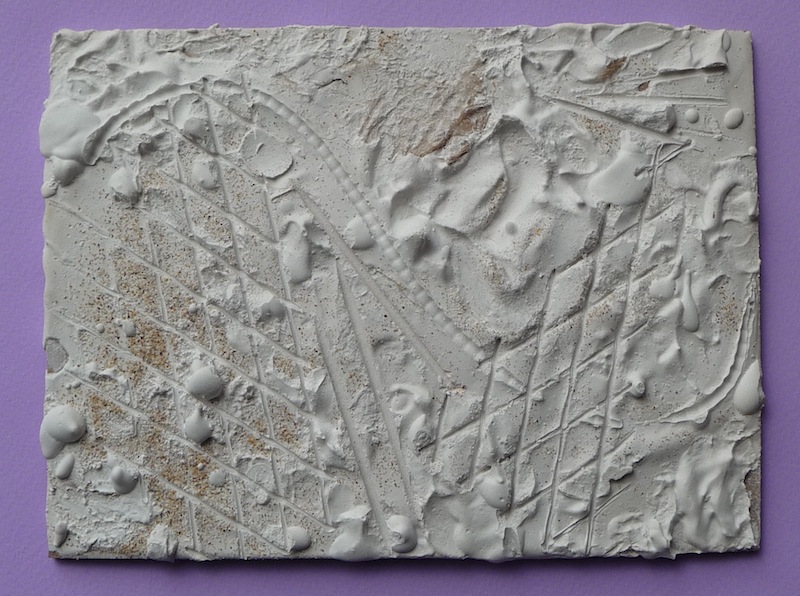
Jean Dubuffet was a French artist whose work included paintings and large-scale sculptures. He used a range of unconventional materials such as sand, pebbles, and butterfly wings, and was often inspired by found objects, patterns, and textures. He was also drawn to the powerful work created by children, prisoners and psychiatric patients, who had received no formal training in art. This prompted him to coin the term Art Brut to refer to their art, which was filled with a spontaneity and freedom he greatly admired and was inspired by. Let’s celebrate that spontaneity and freedom children have by playing with plaster and creating some textures.
Filed under Artists, Jean Dubuffet








 ArtClubBlog