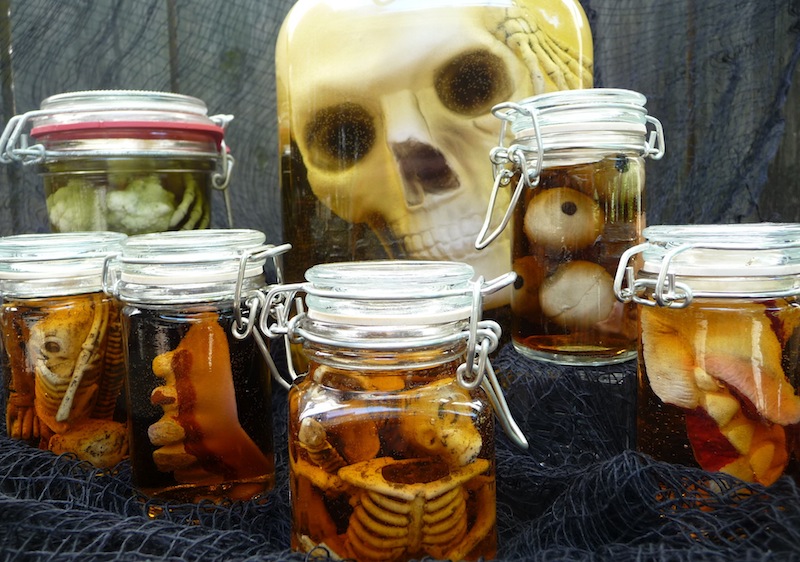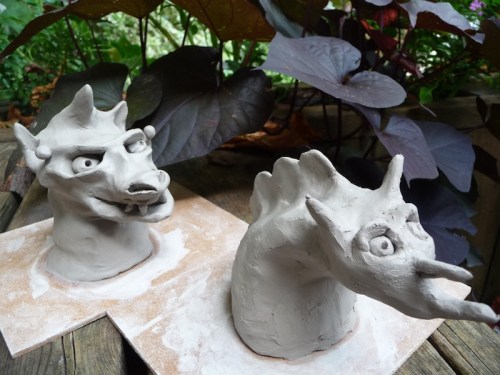
Nothing says Happy Halloween quite like an unsettling display of putrefied-looking body parts neatly stuffed into jars. It’s a perfect way to begin the season. So gather up your boxes of Halloween decorations so we can engage in the fine art of extreme pickling.
Scratching The Surface
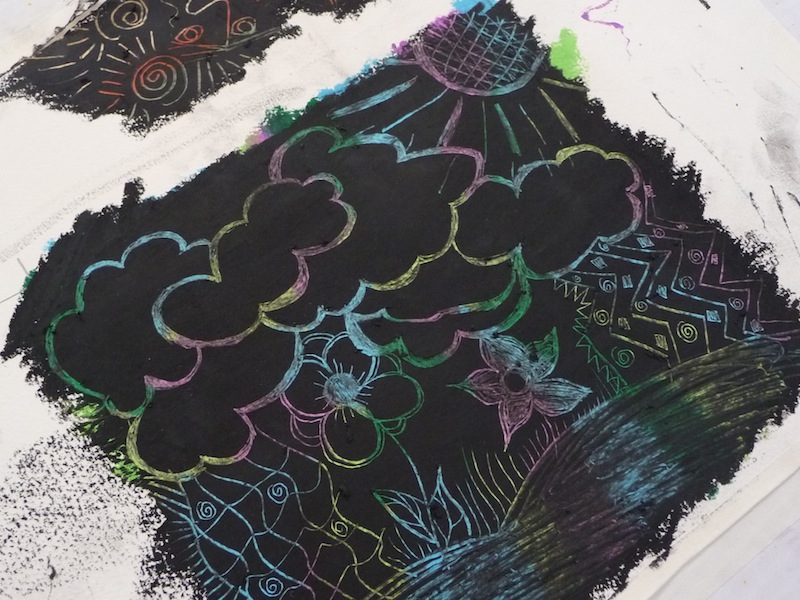
In my previous post, the art of sgraffito was explored with the use of plaster. Here’s a simple variation using oil pastels.
Filed under sgraffito
Sgraffito
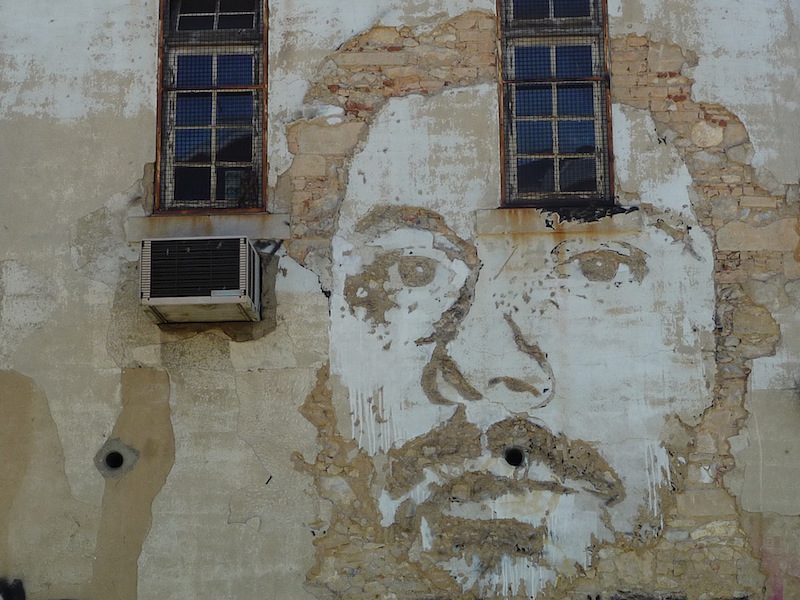
This summer, I saw some wonderful street art in Lisbon made by the artist Alexandre Farto, also known as Vhils. He creates portraits on the facade of buildings by chipping away at the plaster surface and revealing the underlying layers of bricks and stones. You can have a look at this video to see him working.
It was very impressive and had me wondering how this could translate into a project for children. Abandoned buildings…power tools…not practical directions to take! But those wonderful layers had me thinking about sgraffito. Sgraffito, which comes from the Italian word sgraffiare, means to scratch. It is a very old technique which involves applying 2 or more layers of tinted plaster on top of each other. A variety of tools are then used to scratch away sections of the uppermost layer, revealing the underlying colours, which add depth and texture to the work. It’s primary use was for wall decor and ceramics, and while it was explored in many parts of the world, it became immensely popular in 16th century Italy. While traditionally made with plaster, it can also be created with paints and oil pastels.
Filed under sgraffito
Hundertwasser’s Unusual Designs
The Austrian artist and architect, Friedensreich Hundertwasser, had a truly unique way of expressing himself. His work was filled with bold colours, organic shapes, and an obvious respect for nature. Some his architectural designs included rooftops covered with grass, deliberately uneven apartment floors, and always a preference for curvy lines over straight ones. He loved to experiment and often chose to make his own paints, while also exploring a variety of different supports for his work like wood and wrapping paper. He remains one of the most well-known contemporary Austrian artists, and his unique and unusual architectural designs and paintings continue to draw admiration today.
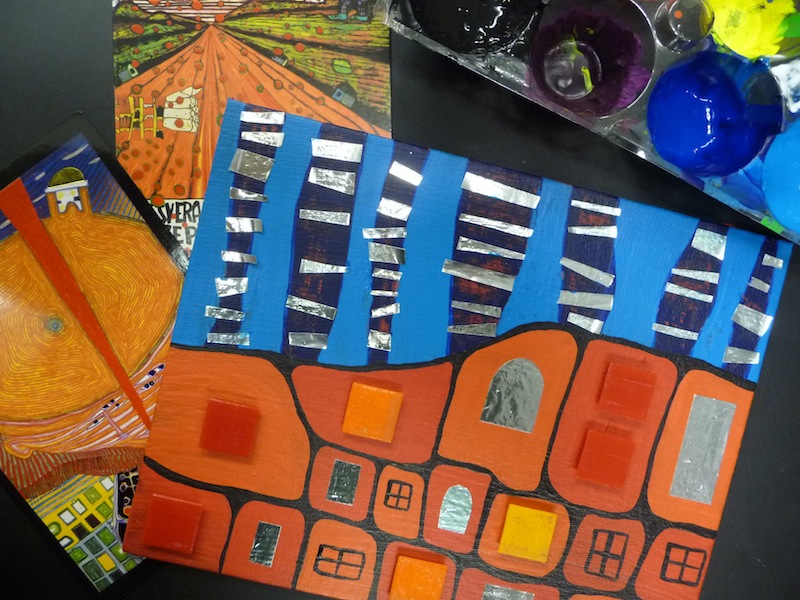
This mixed media project is about painting a building inspired by Hundertwasser’s style, filled with vibrantly coloured waves, curves, and irregular forms.
Filed under Friedensreich Hundertwasser, mixed media, painting
Painting a Galaxy
Our universe is made up of billions of galaxies. Each one is a collections of stars, dust, gas and dark matter, and found in either elliptical, spiral, or irregular shapes. Images of galaxies can be truly breathtaking and mysterious, and will easily inspire children when making their own version. They’ll be painting, sponging, splattering, and using a glass bead textured gel medium to create a cool effect.
Filed under Acrylic Mediums, painting, space
Painted Sticks
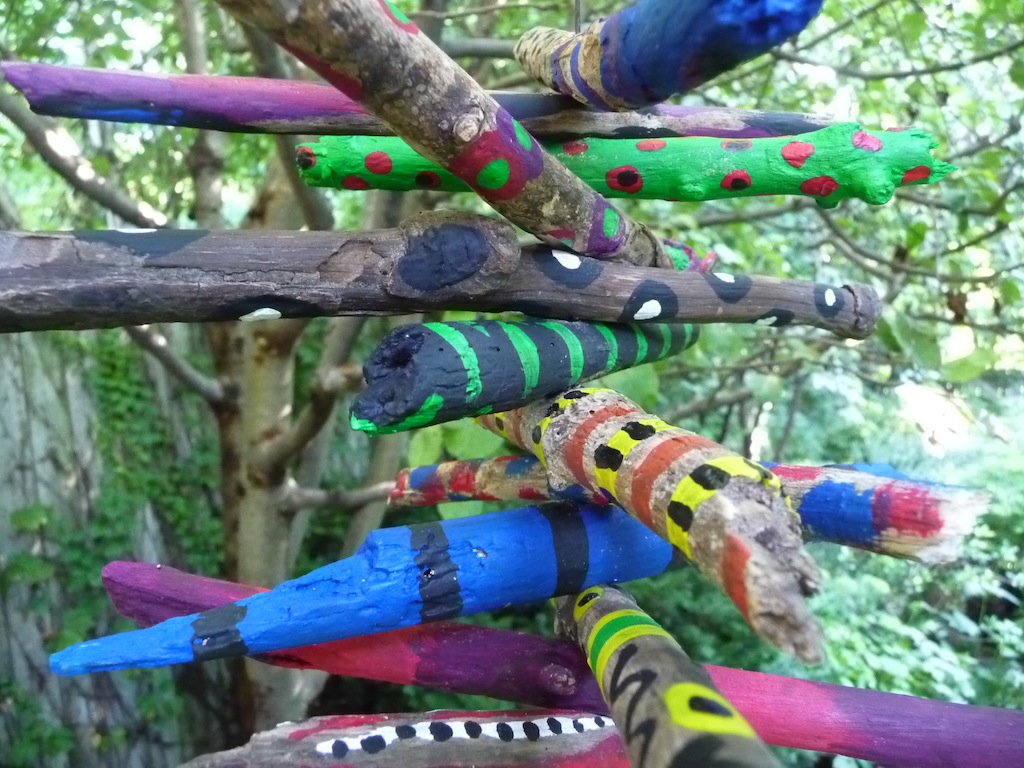
Blending art and nature is a wonderful way to beautify your outdoor space, and it all begins with a little exploring. You’ll need nothing more than a sunny afternoon and some eager children willing to wander through your local park, ravine or woods to gather sticks for this project.
Filed under Art and Nature, painted sticks
Paper Mâché Bowling Pins
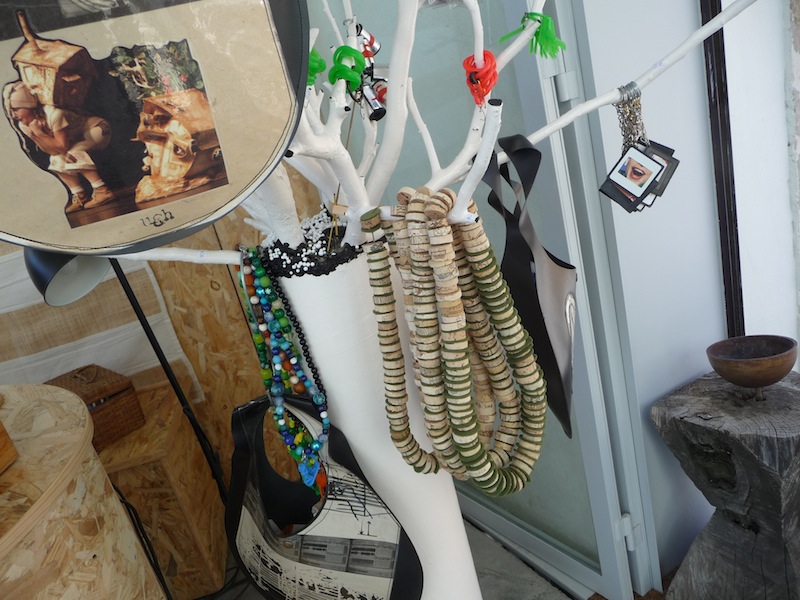
While exploring the labyrinth of streets and medieval alleys in Lisbon’s historical Alfama district, I came across a teeny little shop called Chapito. Turns out it’s part of a school, and showcases an interesting assortment of products made by students and graduates, including some lovely enamel jewelry, cork necklaces, and a bowling pin covered in comics. This was definitely the coolest looking bowling pin I’ve ever seen, and served as inspiration for this project.
Filed under paper mâché
Wire Mobiles
Alexander Calder was born into a family of artists, and while he initially began painting and drawing, he developed a keen interest in mechanics and engineering which he incorporated into his work. His innovative way of thinking and wonderful sense of play lead to explorations in kinetic art, where sculptures were moved about by air currents or motor power. He became famous for inventing these mobiles, as they became known. They showed us a new way of looking at sculpture, which was now shown to move freely and interact with the environment. This project will allow children to experience making this kind of mobile, by using wire to create 3 dimensional portraits.
Filed under Alexander Calder, Artists, mobiles, sculpture