Using found objects to make art is a great way to stretch your imagination. It involves taking materials designed for one purpose and using them for another. One of the most famous examples is Pablo Picasso’s Bull’s Head, made from a bicycle saddle and handlebars. It’s such a simple and humorous idea, but someone had to think of it. The challenge here is to make a robot sculpture using only found objects in metal. Let the games begin!
Category Archives: Artists
Melted Camembert Cheese
Imagine finding inspiration from a soft, overripe, melting Camembert cheese. This is what happened to Salvador Dali, whose inspired moment lead to one of his most famous paintings, The Persistence of Memory. In this painting, hard pocket watches are found unexpectedly limp like melted cheese, and draped in a bizarre dreamlike, coastal landscape. This strange juxtaposition of objects is typical of Surrealism, a 20th century artistic and literary movement which sought to combine the world of dream and fantasy with reality.
Salvador Domingo Felipe Jacinto Dali i Domènech was born on May 11, 1904, in the small town of Figueres, Catalonia, Spain. He was an extremely versatile and talented artist, exploring different styles and media as a painter, sculptor, draughtsman, illustrator, writer and film maker. Dali is probably best remembered for his striking and unusual images in his Surrealist work, as well as his flamboyant personal style, and quite possibly the most famous waxed moustache in the world. Feliç aniversari Dali! Let’s celebrate his birthday by making some melted looking creations of our own.
Filed under Art Movements, Artists, polymer clay, Salvador Dali, Surrealism
Suranimals
It’s spring, and little creatures are just about everywhere you look, hiding under piles of leaves, and resting under rocks and trees. Insects alone outnumber us, with an estimated 10,000,000,000,000,000,000 (10 quintillion) of them worldwide, making them the most successful life form on the planet. I can’t think of a better way to celebrate than by coming up with a few imaginary ones of our own, inspired by the work of artist Jerome Couëlle .
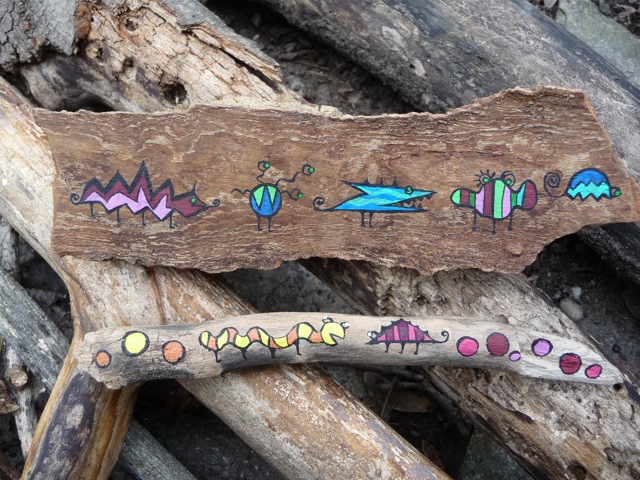
Couëlle is a french born artist, who lives in both Toronto and Vermont. He uses the word suranimals to describe the wonderfully imaginative creatures that inhabit his surreal paintings. You’ll find fish strolling about on legs, smiling holstein cats, and multi-coloured insects with hats. I invite you to discover his magical world, which will surely inspire you to create some whimsical creatures of your own.
“My paintings are dedicated to the animals whom I call ‘suranimals’ for they are all knowing, to the children, to the artists, to the poets, the writers, the musicians who refuse to be chained to what used to be, and do not accept the world as their reason has taught them, but have freed their eyes to be the true window to peer into infinity.” Jerome Couëlle
Filed under Art and Nature, Artists, Jerome Couëlle, painting
Framed By Klimt
Gustav Klimt was a highly influential Austrian painter and illustrator who was born in 1862, and who died in 1918. He was one of the founders of the Vienna Secession movement, whose members hoped to create a new style of art, breaking with historical influences and tradition.
Klimt explored many themes such as love and the cycle of life, but is best known for his look at sexuality in art, considered highly controversial during the stuffy Victorian era in which many of his works were created. Some of his most beautiful paintings showed women enveloped in luxurious shapes, colours, patterns and costumes. The use of gold also comes to mind when thinking of his sumptuous work. His prominent use of gold leaf was thought to be influenced by his father’s profession as an engraver, as well as Byzantine imagery and the mosaics of Venice seen throughout his travels.
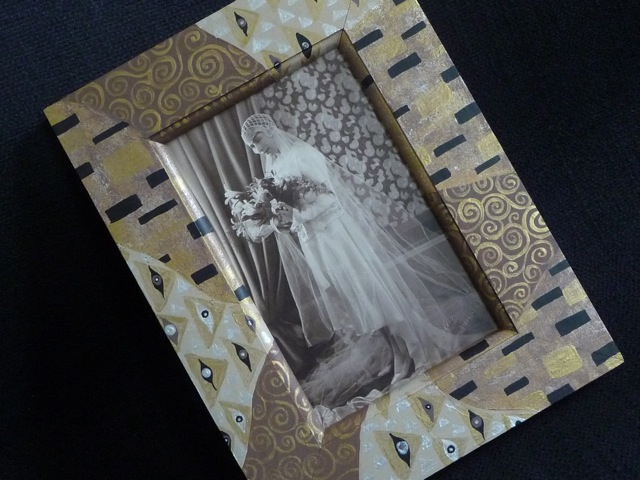
This project focusses on Klimt’s richly patterned works, infused with delicious golden swirls and textures. You’ll be painting a frame, which can then be used to display your own artwork or favorite photo.
Filed under Gustav Klimt, painting
Painting With Scissors
Henri Matisse, who was born in 1869, was an immensely talented french artist who worked as a draughtsman, printmaker, sculptor and painter. He is considered by many to be the most important french painter of the 20th century. During the latter part of his life, his health deteriorated, often leaving him bedridden or forced to use a wheelchair. As a result of these constraints, Matisse explored new ways of expressing himself and began to make large scale cut paper collages. They allowed him to show off his incredible sense of colour, and remain among the most influential works of his career. He referred to his experimentation with cut outs as “painting with scissors”, and covered the walls of his room with them, transforming his environment into “a little garden where I can walk.”
If you’re in need of some playful ideas to decorate your child’s room, why not consider colourful paper cut outs to brighten up a wall, or create a unique looking border. All you need is an inviting pile of construction paper, scissors, and some enthusiastic children to create an explosion of colourful, organic shapes.
Filed under Artists, Henri Matisse, paper crafts
The Life Cycle Of An Egg Carton
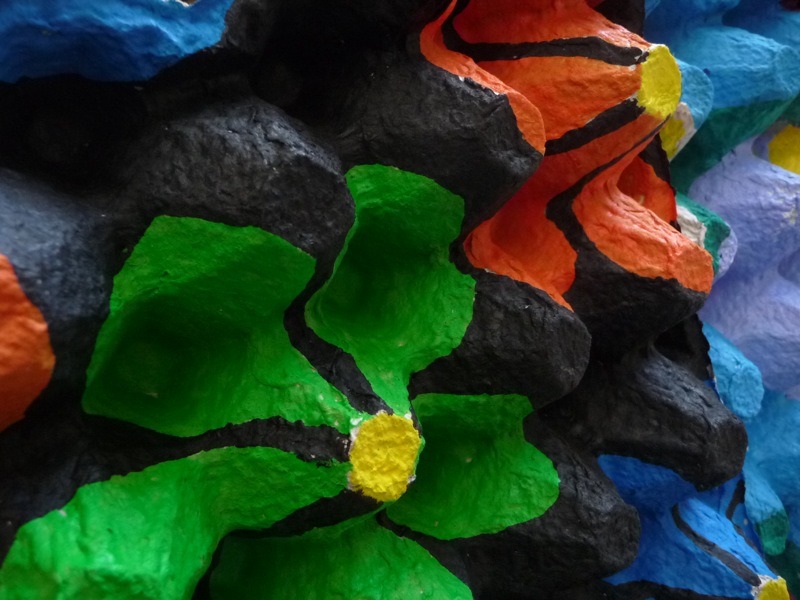
The egg carton’s primary purpose is to escort eggs from the chicken coop to your home, where it either gets tossed in the recycling bin, or with the help of some ingenious humans, mutates into bug eyes, seed starters, sorting trays, cat beds, flowers, molds, lights, and creatures of all kinds. Finding a second life for an egg carton has never been a problem, but using it as a canvas to paint portraits and patterns on never occurred to me until I came across the work of Enno de Kroon. His “eggcubist” portraits play with the viewer’s perception, looking strangely deformed because of the peaks and valleys of his unorthodox canvas. They’re also very cool and look deceptively easy to paint. I found focussing on vibrant colours, patterns, and simple shapes worked best for children, and proved easier to execute. They’ll love the results.
Filed under Artists, egg cartons, Enno de Kroon, painting, recycling
Paul Klee Project
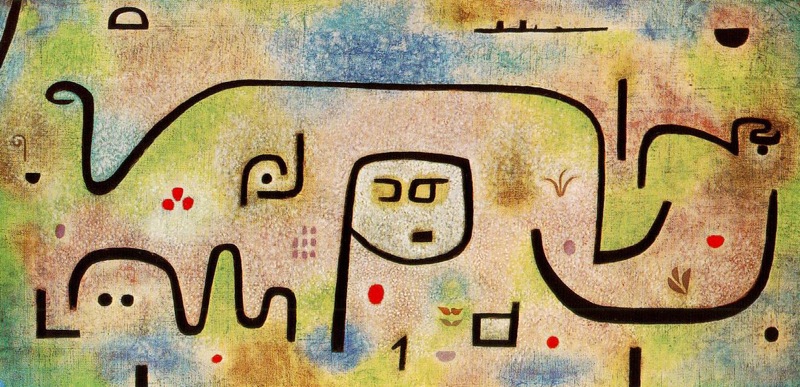
The Swiss/German artist, Paul Klee, was born in 1879 and today would have been his birthday. He was a great admirer of children’s art, primitive art, and deeply influenced by music, which he studied for years. Klee’s work has been associated with many different styles including Expressionism, Surrealism and Abstraction, but he generally liked to work independently, coming up with his own interpretation of trends. This combination of skills and interests, coupled with his mastery of colour and experimentation with different media, made Klee’s work unique.
In this project, we will focus on Klee’s use of geometric forms, symbols and figures applied to dreamlike coloured backgrounds.
Soundscapes

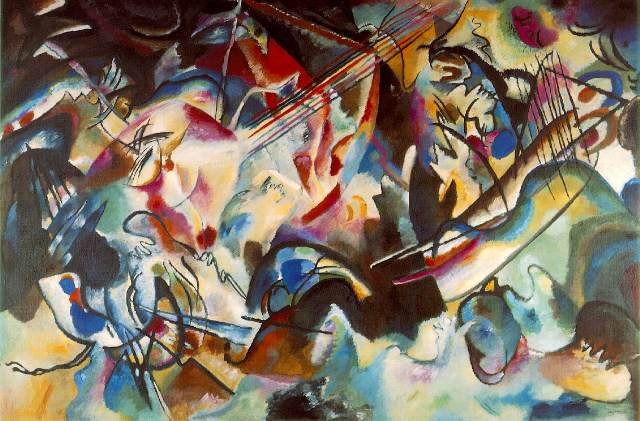
Composition 6 by Wassily Kandinsky. 1913. Image: http://www.chss.montclair.edu/~nielsenw/dada.html
“Lend your ears to music, open your eyes to painting, and …stop thinking! Just ask yourself whether the work has enabled you to “walk about” into a hitherto unknown world. If the answer is yes, what more do you want?” Wassily Kandinsky 1910
Music accompanies us throughout the day while we are driving, playing, or walking along with our ipods. It can create a peaceful ambience as we go about our reading, or stir powerful emotions begging to be expressed in some way, which brings us to this project. There is a wonderful connection between music and visual art which has been examined by many artists. Russian-born Wassily Kandinsky was fascinated by this relationship and explored it in many of his paintings. He is credited with creating the first truly abstract paintings like the one above, and is suspected of possibly being a synaesthete, having the ability to see sound as colour and vice versa. This project gives children the opportunity to think about the emotions music awakens, and how they choose to paint the sounds they hear.
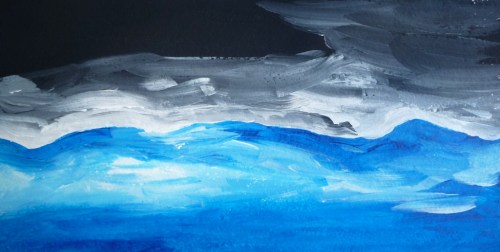
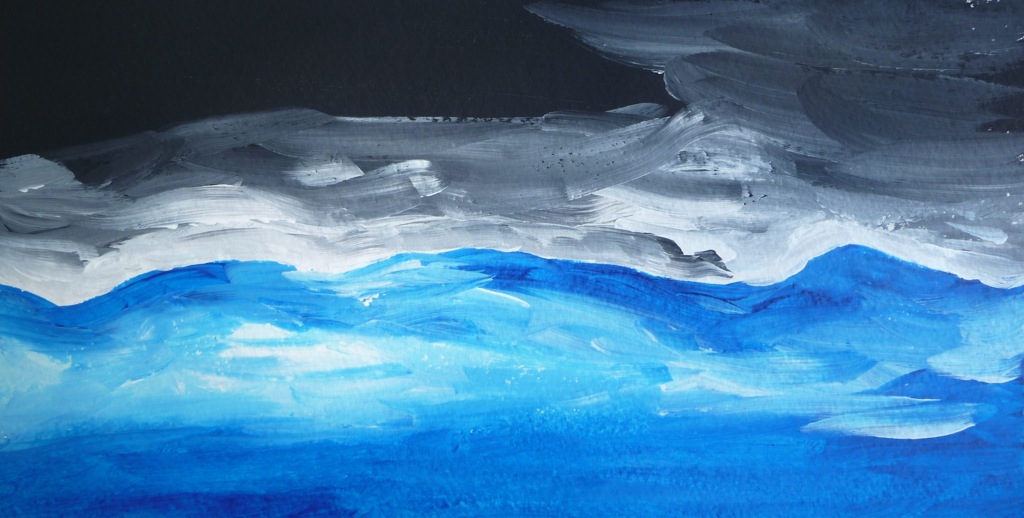
Ten year old Sophie painted this while listening to E.S.T.’s ‘From Gagarin’s Point of View‘
“In the beginning it was relaxing like a day at the beach, so I made some blue and white waves. In the middle of the song it turned darker, so I decided to paint the other half with black and white which also turned to grey. At the end, both sides come together.”
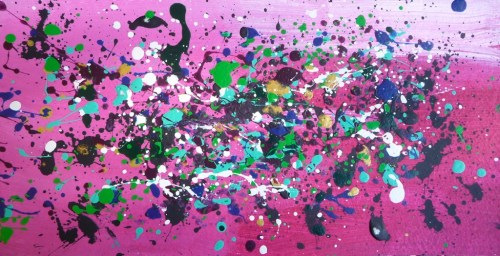
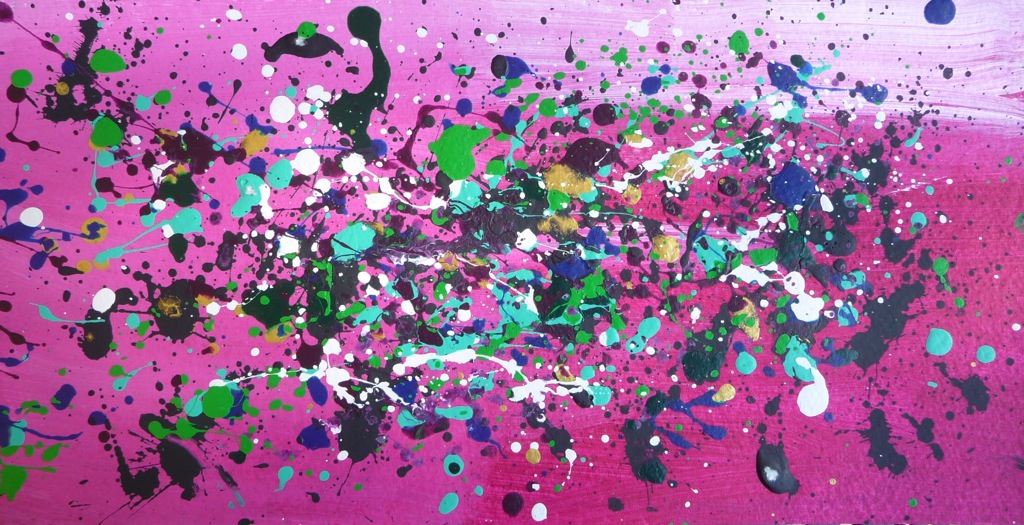
Sophie painted this while listening to the 4th movement of Beethoven’s 5th Symphony.
“You may think it’s a pink background with a bunch of colourful splatters on it, but think again. The beginning is not too angry so I thought dark pink was perfect. To represent the anger and violence, I decided to do some black splatters, but then it became more joyful so I chose colour – like a war between colours. I chose to make splatters to represent the energy and anger.”
Filed under Artists, music, painting, Wassily Kandinsky
Pop Art Flowers

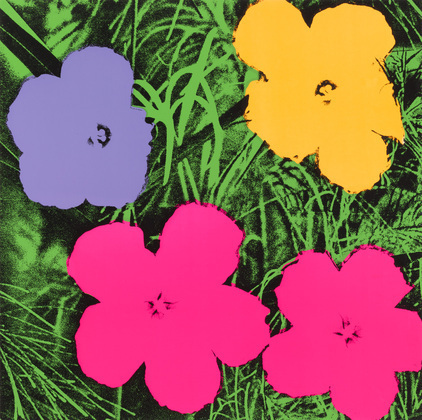
Untitled by Andy Warhol. Image: http://moma.org
The Pop Art movement was all about making art more accessible. This movement began in the 1950’s in England, and by the end of that decade reached the United States. Everyday mass produced objects from the world of advertising and comic books were typically represented. Andy Warhol, an American artist, was one of the leading figures in this movement and became famous for his paintings of Campbell’s Soup Cans, celebrities like Marilyn Monroe, and his silk screen prints. Since today is his birthday, let’s celebrate his work by painting some flowers and exploring repetition and colour in a Pop Art style.
Filed under Andy warhol, Artists, flowers, painting, Pop Art
The Unexpected Picasso

Baigneuse et Profil by Pablo Picasso, 1930. Photo:http://picasso-paris.videomuseum.fr
When you consider Picasso’s body of work, three dimensional pieces in sand don’t usually come to mind. So this turned out to be a surprising discovery I made when visiting the Musée National Picasso in Paris a few years ago. Click on the link and select ‘oeuvre en 3 dimensions’ to have a look at the other seven works in this series, and for inspiration to make your own version. Here’s a quote from Picasso which nicely explains why we shouldn’t be surprised by his explorations:
“When you come to think of it, I am probably a painter without style. ‘Style’ is often something that ties the artist down and makes him look at things in one particular way, the same technique, the same formulas, year after year, sometimes for a whole lifetime. You recognize him immediately, for he is always in the same suit, or a suit of the same cut. There are, of course, great painters who have a certain style. However, I always thrash about rather wildly. I am a bit of a tramp. You can see me at this moment, but I have already changed, I am already somewhere else. I can never be tied down, and that is why I have no style,” Picasso wrote. (http://www.abcgallery.com/P/picasso/picassobio.html)
Filed under Artists, Pablo Picasso